
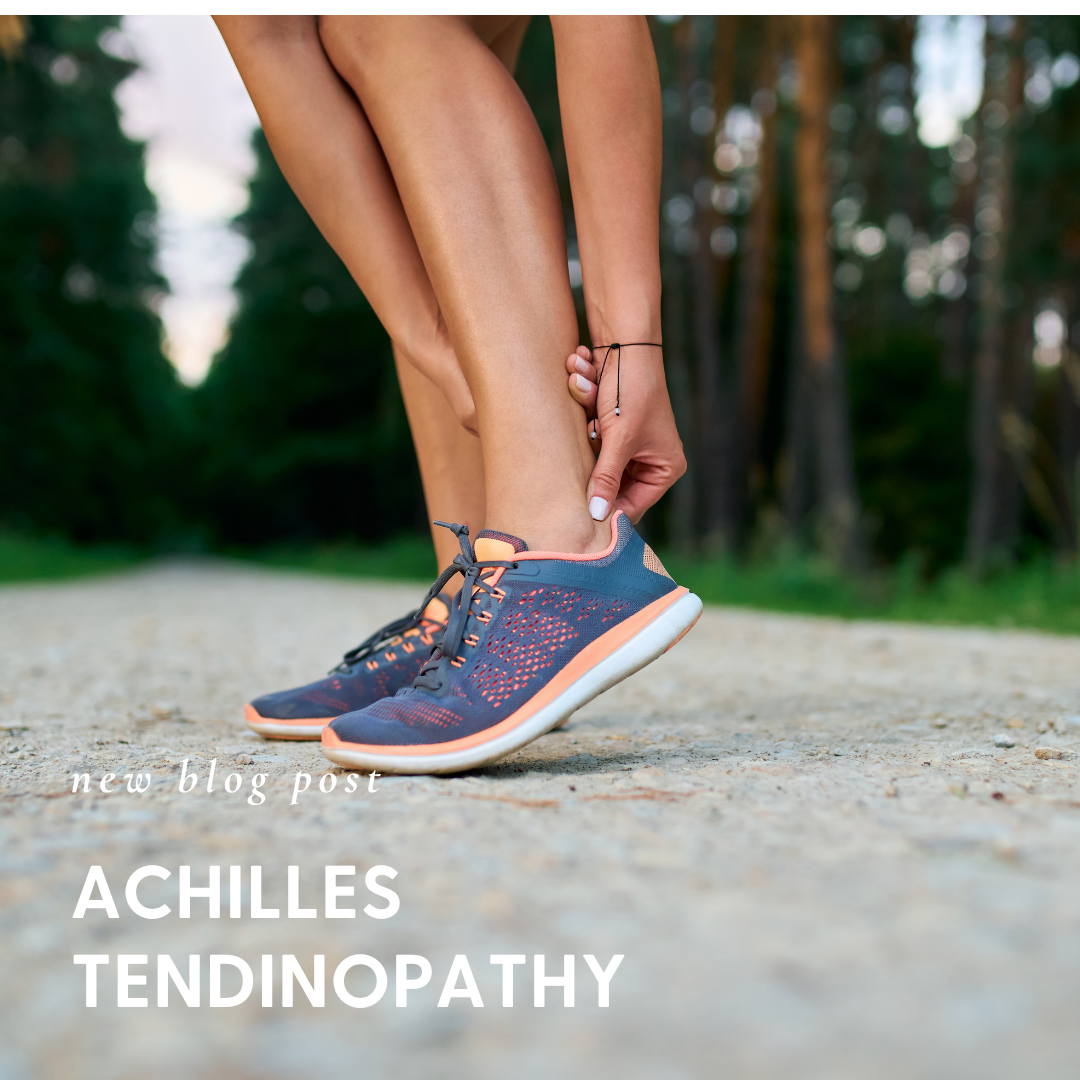
Achilles tendinopathy causes pain and reduced capacity in the tendon connecting the calf muscles to the heel. It commonly affects runners, field-sport athletes and active adults, but it can also occur without sport.
There are different types of Achilles pain
Mid-portion Achilles tendinopathy affects the tendon a few centimetres above the heel.
Insertional tendinopathy affects the point where the tendon attaches to the heel bone. Compression against the calcaneum (heel bone) can be important here, particularly with deep ankle bending, hills or flat footwear.
Occasionally, the nearby plantaris tendon may contribute to pain on the inner side of the Achilles.
Assessment helps identify the likely pattern and guide exercise selection, as it differs depending on the sub-type of tendon pain.
What happens to the tendon?
Tendinopathy is not simply inflammation (although some may be present), and it does not mean the tendon is about to rupture. The tendon has usually become sensitive and less able to tolerate its current workload.
Rapid changes in running, jumping, hills, speed work, footwear or training frequency are common contributors.
Typical symptoms
Pain and stiffness are often worse during the first steps in the morning or at the beginning of activity. The tendon may warm up during exercise and become sore again afterwards or the next day.
How is it assessed?
Your physiotherapist will assess the location of pain, tendon tenderness, ankle movement, calf strength and the ability to perform calf raises, hopping and running tasks.
A sudden snap, marked weakness or inability to push off requires urgent assessment for possible rupture. Scans are not usually necessary for a typical gradual-onset tendinopathy.
How can physiotherapy help?
Manual therapy and soft-tissue treatment may help ankle movement, calf comfort and associated stiffness. Heel lifts, footwear changes or temporary activity modification may reduce symptoms.
These measures support rehabilitation, but progressive tendon loading is the main treatment.
A staged loading program
Isometric calf exercises may be used early when the tendon is irritable. Rehabilitation then progresses to controlled calf raises and heavy, slow resistance.
Both the gastrocnemius and soleus need training, using straight-knee and bent-knee exercises. For insertional pain, deep heel-drop positions may initially be limited to reduce compression.
Once strength improves, faster loading, hopping, jumping and running are introduced according to the person’s goals.
Recovery expectations
Achilles rehabilitation commonly takes several months. The tendon adapts slowly, and consistency is more important than constantly changing exercises.
The goal is not complete avoidance of discomfort. It is to use an acceptable amount of load, monitor the response and gradually build the tendon’s capacity for work, running and sport.